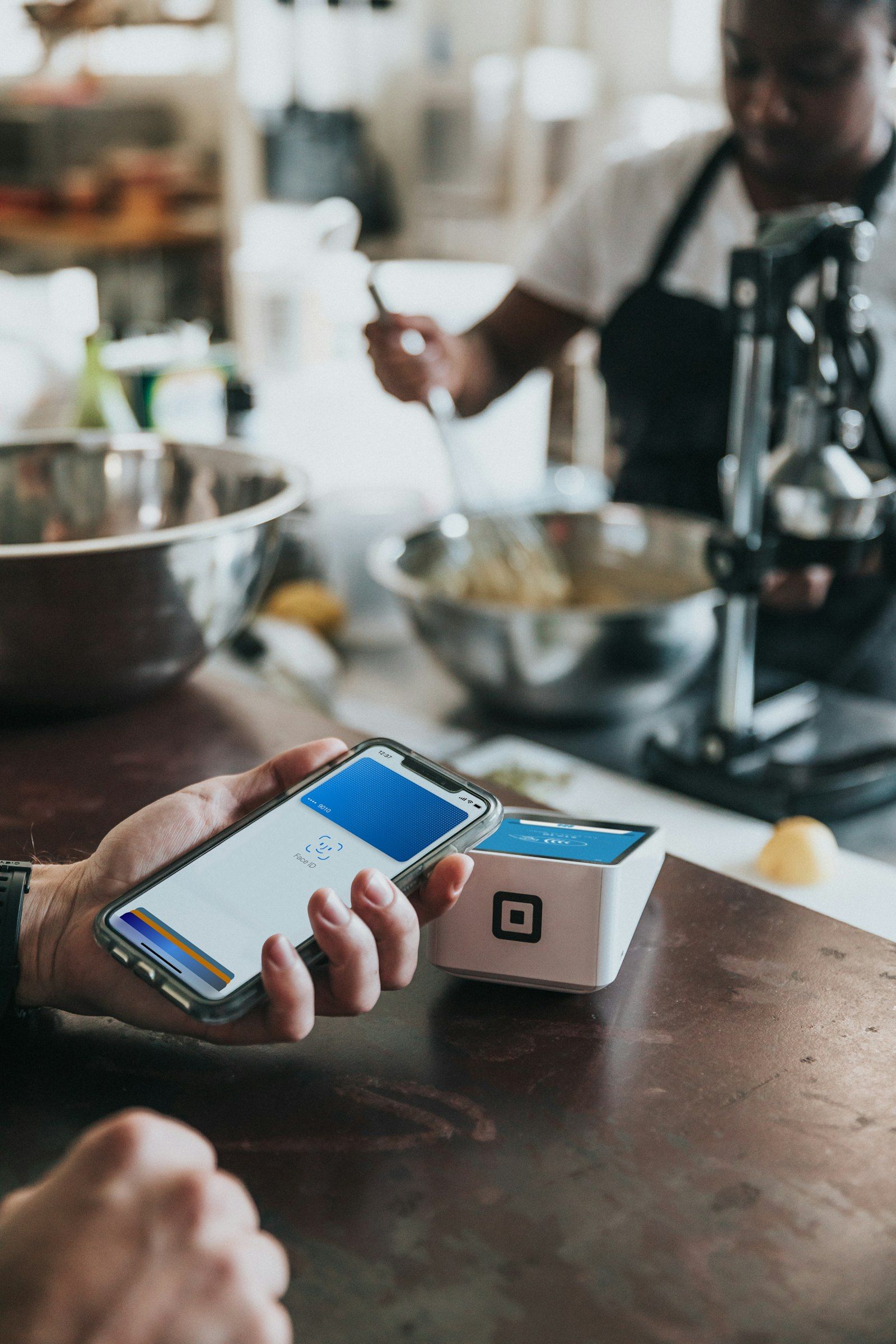




Every time a customer saves a card in an app or taps their phone at a till, a quiet piece of security technology is doing the heavy lifting: tokenization.
What is payment tokenization?
Tokenization replaces sensitive payment data, such as a 16-digit card number (PAN), with a randomly generated substitute called a token. The token can be stored and used to process payments, but on its own it is useless to anyone who steals it — it cannot be reversed to reveal the original card number.
The real card details are kept in a highly secured token vault, managed by a payment provider or card network.
Tokenization vs. encryption
The two are often confused, but they work differently:
- Encryption scrambles data using a key. Anyone with the right key can turn it back into the original.
- Tokenization swaps data for a stand-in that has no mathematical relationship to the original. There is nothing to decrypt.
In practice, strong payment systems use both: encryption to protect data in transit, and tokenization to protect data at rest.
Types of payment tokens
Gateway tokens
Issued by a payment provider so a merchant can charge a returning customer without ever storing their card details.
Network tokens
Issued by card networks such as Visa and Mastercard. They are tied to a specific merchant and can be updated automatically when a card expires or is replaced — which helps reduce failed payments.
Device tokens
Used by mobile wallets like Apple Pay and Google Pay, where each phone holds its own unique token instead of the real card number.
Why businesses should care
- Lower risk. If your systems never store raw card numbers, there is far less to steal in a breach.
- Reduced PCI DSS scope. Handling fewer card details means fewer of your systems fall under strict PCI compliance requirements.
- Higher approval rates. Network tokens stay valid when cards are reissued, so subscriptions and saved cards keep working.
- Faster checkout. Saved, tokenized cards make one-tap payments possible.
Getting started
Most businesses do not need to build tokenization themselves. The simplest path is to work with a payment platform that tokenizes card data at the first touchpoint, so sensitive details never reach your servers at all.
Building on Syper
Syper is built with security at its core, including real-time fraud protection on every transaction, so you can offer fast, frictionless payments without compromising on safety. If your product moves money, start building on Syper today.